This case study examines how Saxmundham Town Council has responded to the cumulative impact of multiple Nationally Significant Infrastructure Projects (NSIPs), with a focus on community engagement, managing competing pressures, and influencing project outcomes within a constrained decision-making framework.
NSIPs on the doorstep
Sharon Smith joined the Council as Clerk in 2022. She previously served as Clerk to Theberton and Eastbridge, Yoxford, and Middleton cum Fordley Parish Councils, which were directly affected by the Sizewell C project. This provided direct experience of the scale and complexity of NSIPs, including the demands placed on local councils, the intensity of community engagement, and the need to engage constructively with developers to seek changes where possible. This experience informed how the Council responded when the Sea Link, Nautilus, and Lion Link proposals were brought forward.
Sea Link, a proposed electricity transmission reinforcement between Kent and Suffolk, Lion Link, a proposed electricity link between the UK and the Netherlands, and Nautilus, a proposed electricity link between the UK and Belgium, are National Grid projects that have progressed through the pre-application stage, with Sea Link undertaking early consultation from 2022, and Lion Link following a similar process, including statutory consultation in 2026.

At one stage, all three projects proposed large-scale converter stations to the east of Saxmundham, involving substantial industrial infrastructure, including buildings of up to around 26 metres in height within sites covering several hectares, connecting to the substation at Kiln Lane near Friston.
Nautilus was subsequently progressed at an alternative location at the Isle of Grain.
SeaLink is currently at the examination stage, while Lion Link remains in pre-application. The overlapping timelines of these projects raised immediate concerns in relation to cumulative impacts, particularly when considered alongside the ongoing construction of Sizewell C.
Influencing through engagement
The Council first engaged with the Sea Link project during non-statutory consultation, when the location of the converter station had not yet been fixed and Saxmundham was identified as one of a number of emerging site options.
By the time Sea Link reached statutory consultation, Saxmundham had been identified as the preferred site. In response, the Town Council held a well-attended public meeting to gather views from residents.
The Clerk and the Council’s Energy Projects Lead, Cllr Geraldine Barker, also attended the Sea Link public exhibitions, speaking with residents and recording their views to ensure local concerns were fully understood. The Council’s formal response to the proposals set out clear concerns regarding the location, scale and impact of the proposed converter station.
In parallel, the Council also engaged with the LionLink project during its pre-application stage, including responding to consultation on the Environmental Impact Assessment Scoping Report.
As both projects progressed, National Grid explored options to reduce overall impact, including the co-location of infrastructure. The Council continued to engage with both projects through subsequent consultation stages, maintaining its position that the proposed infrastructure should not be located so close to a rural settlement while seeking to influence design and mitigate impacts where possible.
Alongside formal consultation responses, the Council also sought to establish a constructive working relationship with both National Grid companies, engaging directly with project representatives to ensure that local concerns were clearly understood.
Sharon and Geraldine also undertook a site visit to the Viking Link converter station in Lincolnshire to better understand the scale and siting of this infrastructure. This enabled the Council to be firm in its opposition to the proposed location, while also working pragmatically to influence design, and secure mitigation and community benefits should development consent ultimately be granted.
For more information on the Council’s concerns in relation to both projects, its responses to consultations and examination, visit the Council’s dedicated Energy Projects website page: www.saxmundham-tc.gov.uk/major-projects/energy-projects.
For practical guidance on how Town and Parish Councils and communities can engage effectively with NSIPs at each stage of the process, download the guide, ‘Getting to Grips with NSIPs’.
Collaborative community engagement
In response to the scale and complexity of the two proposals, the Council established a group – the Fromus Energy Projects Team – bringing together town councillors, parish councillors from neighbouring communities, and local residents with relevant knowledge and interest.
The intention was to coordinate a shared response to PINS, reflect the interests of affected communities, and distribute the significant workload associated with engaging in the NSIP process.
As discussions developed, differing perspectives emerged within the group regarding how best to respond to the proposals. While some members favoured a continued focus on opposition, others explored opportunities to secure longer-term environmental and community benefits should the projects proceed.
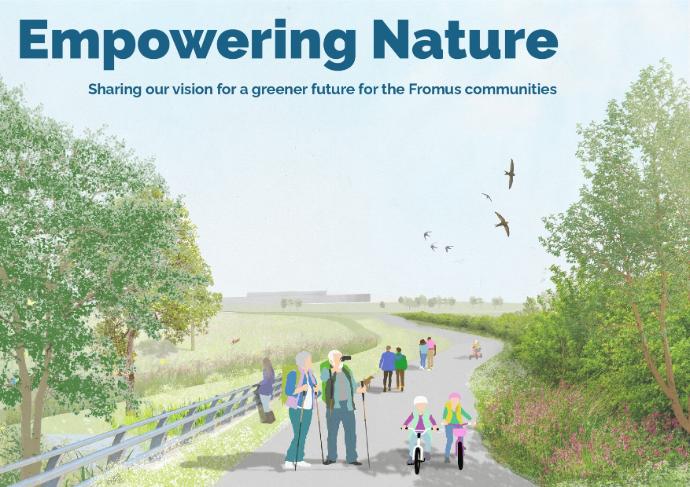
From this, the concept of Empowering Nature – Protecting Saxmundham took shape, initially developed by members of the group as a community-led response focused on biodiversity, green infrastructure, and creating a positive legacy in the context of large-scale development. The initiative can be viewed on the Council’s website: Empowering Nature – Protecting Saxmundham.
The differing views ultimately proved difficult to reconcile, and the wider partnership was not sustained. However, the work on Empowering Nature was taken forward by the Town Council, informed by subsequent engagement with local residents, and endorsed following public consultation.
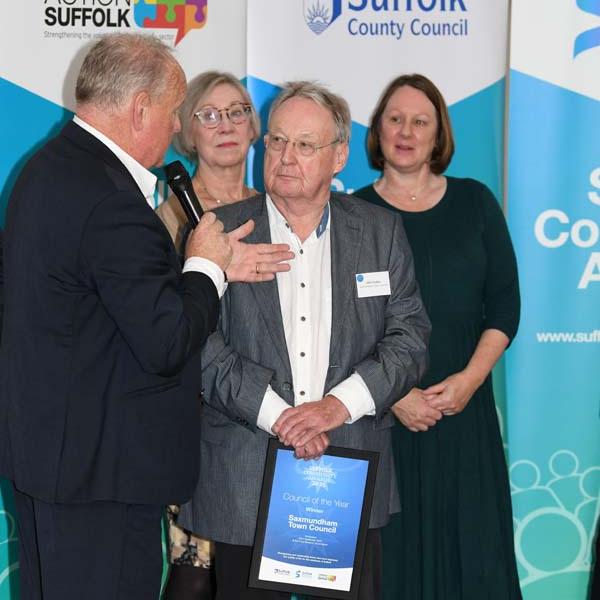
This work was recognised when Saxmundham Town Council was jointly named Suffolk Council of the Year 2025, with the judging panel highlighting its visionary leadership, innovation and community-first approach. The Council was also a finalist in the same category at the National Association of Local Councils Star Council Awards 2025.
Challenges and opportunities
This experience highlighted both the opportunities and challenges of collaborative community engagement, particularly where there are strongly held but differing views on how best to respond to major infrastructure proposals.
Empowering Nature has received support from Suffolk County Council, East Suffolk Council, several local town and parish councils, Suffolk Wildlife Trust, the RSPB, Suffolk Coastal MP Jenny Riddell-Carpenter, and Ofgem.
It was included as an appendix to the Council’s Relevant Representation to the Sea Link examination. Both National Grid applicants have also responded positively to the initiative, and elements of the proposal have informed the evolving design of the LionLink converter station.
Saxmundham Town Council’s ambitions
Saxmundham Town Council is seeking to secure funding and practical support to deliver the initiatives set out in Empowering Nature, alongside wider strategic measures to mitigate the impacts of hosting major energy infrastructure of national importance and to provide lasting community benefits for the town.
This includes exploring opportunities to support community wellbeing and resilience, recognising the pressures associated with prolonged engagement in multiple NSIP processes.
You can read our article on lessons learned , based on Sharon’s experiences working with NSIPs. Or if you have any questions about engagement regarding an NSIP, contact us through the Members Portal or email engagement@suffolk-alc.gov.uk.